
In developing AI-based driver assistance systems, Bosch relies on its own optimization toolchain to tailor neural networks specifically to the target hardware. As the company explains in an interview with Markt&Technik, the focus is not on developing new neural networks, but rather on their efficient implementation on automotive SoCs. Bosch explains how its proprietary AI optimization toolchain tailors models to the target platform through hardware-aware transformations, quantization, and benchmarking. Key factors here include not only latency and computing power, but also perception quality, determinism, and real-time capability. In the interview, Texas Instruments complements this perspective with details on the new TDA5 SoC family and the C7 NPU. In addition to high energy efficiency and scalable AI computing power, the focus is particularly on the heterogeneous architecture and integrated security features. Also of interest is the close collaboration between the two companies in optimizing transformer-based models such as BEVFormer, as well as the use of a Virtualizer Development Kit that enables software development and validation even before the hardware is available. (oe)
Branchen-News
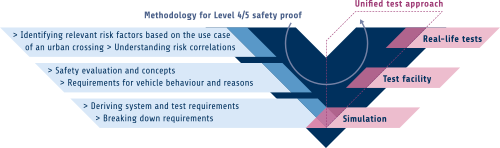
Neuer Standard: Sicherheitsnachweis für automatisierte Fahrzeuge
21 Firmen haben ein Modell erarbeitet, dass die Grundlage schaffen kann, Sicherheit in automatisierten Fahrzeugen nachzuweisen.
News
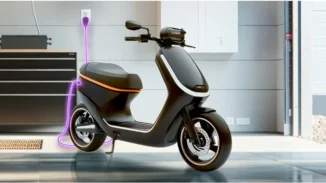
Texas Instruments: Effiziente Leistungsregelung für kleine E-Fahrzeuge
Die UCC25661x-Q1-Serie von Texas Instruments kombiniert ein innovatives Regelverfahren mit effizientem Leerlaufmanagement und umfassendem Schutzkonzept – ideal für robuste LLC-Stromversorgungen in Automotive- und EV-Anwendungen mit weitem Ein- und Ausgangsbereich.
Branchen-News
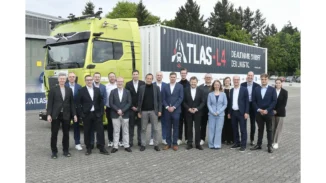
Erfolgreicher Projektabschluss: ATLAS-L4 bringt autonomen Lkw auf die Autobahn
Zwölf Partner aus Industrie und Forschung zeigen mit dem erfolgreichen Projektabschluss, wie Level-4-Transport zwischen Logistikzentren Realität wird – technologisch, rechtlich und praxisnah validiert.