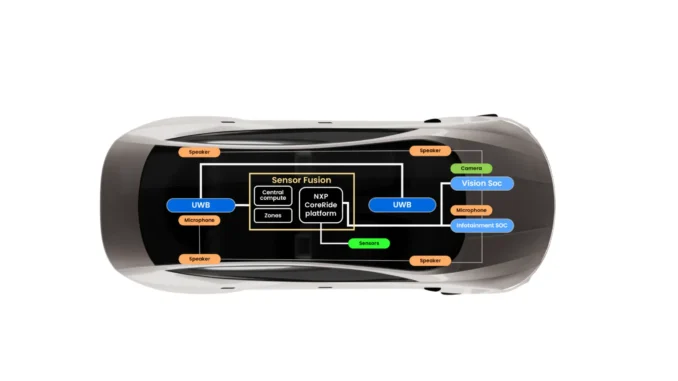
NXP Semiconductors is expanding its collaboration with the BMW Group. Starting with select vehicle programs for the 2026 model year, the Trimension NCJ29D6 ultra-wideband (UWB) solution will be used in production vehicles. For the first time in a monolithic automotive solution, the chip combines precise distance measurement with short-range radar capabilities, enabling both digital vehicle access and presence detection inside the vehicle.
UWB technology forms the basis for features such as BMW Digital Key Plus, in which a smartphone or smartwatch replaces the car key. In addition, the system detects people or animals that have been left inside the vehicle after it has been parked. To do this, the chip analyzes even the slightest movement patterns and alerts the driver to a potential hazardous situation. By integrating the Trimension NCJ29D6 family, BMW is simultaneously addressing future regulatory requirements as well as planned NCAP assessment criteria in Europe and China. According to NXP, the UWB platform also provides the basis for additional features such as kick sensing, intrusion detection, and automated charging. (oe)