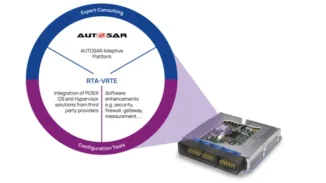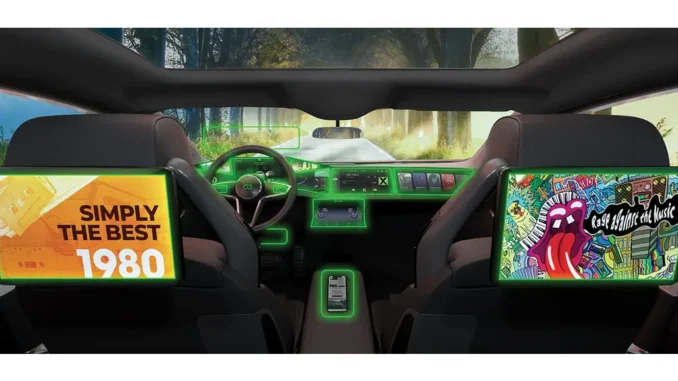
Elektrobit’s 20-page white paper shows how virtualization solutions enable fully digital, end-to-end development of in-vehicle infotainment (IVI) systems. The two authors explain how the use of virtualization, digital twins and cloud-based development environments enables OEMs and Tier 1 suppliers to accelerate prototyping, efficiently implement the integration of heterogeneous operating systems – including Linux, Safe POSIX, Android and classic and adaptive AUTOSAR stacks – and optimize software validation without physical hardware. Central contents of the paper are:
- End-to-end virtualization of the IVI stack: emulation not only of the HMI, but also of the sensory environment (e.g. VHAL signals), vehicle applications and legacy components. The system provides a realistic pilot environment for developers.
- Development decoupled from hardware: Users work via virtual displays and debug interfaces (e.g. Android Debug Bridge, ADB) just like in real vehicle architectures, including configuration, visualization and theme management.
- Seamless integration into CI/CD/CT processes: The virtual environment can be integrated into existing development and test pipelines both cloud-based and on-site. This increases agility and reduces time-to-market.
- Efficiency and freedom of research: The solution counteracts development cycles, reduces material requirements, minimizes dependence on physical vehicle platforms and enables early testing.
According to the two authors Ayhan Ak (Product Solution Manager at Elektrobit) and Raúl Latorre Fortes (Director of Business Development for EMEA at Elektrobit), the entry into software-defined vehicle architectures does not necessarily require a complete redesign of the E/E architecture. The infotainment area in particular offers a comparatively simple and cost-efficient starting point for the SDV transformation. (oe)
Whitepaper (pdf)